

Dental Implants in New City, NY
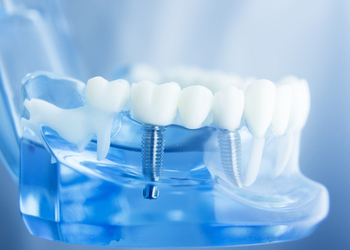
Our team at Rockland Dental Specialists provides a full range of dental services designed to restore both function and confidence in your smile. Dental implants in New City are the most successful and predictable way to replace missing teeth in both the upper and lower jaw. The implant itself is a small titanium fixture with tiny threads that your surgeon places into the jawbone as an anchor. Simply put, dental implants are root replacements.
The jawbone attaches to the implant through a process called osseointegration, forming a secure connection between the jaw and the new tooth. A dental implant is the most natural way to replace a missing tooth because it is the only tooth replacement option that replaces the root as well as the exposed portion of the tooth. Board-certified periodontist and implantologist Dr. Shalom Mintz and our team provide comprehensive implant dentistry and periodontal care, for every patient. When a tooth is missing, bone loss begins almost immediately, neighboring teeth shift, and chewing becomes genuinely difficult. Dental implants are the only tooth replacement option that replaces the root as well as the crown, preserving jawbone and restoring full function. Periodontists receive three additional years of residency training focused specifically on the bone, gum tissue, and structures that support implants — making our team uniquely qualified to place implants and manage long-term tissue health. Ready to restore your smile? Contact our team in New City today to schedule a consultation.
The Dental Implant Procedure: What to Expect
Before beginning any implant procedure, our periodontists conduct a thorough diagnosis and review of your medical history to confirm you are a healthy candidate for dental implants. Because successful implant outcomes depend heavily on the health of the surrounding bone and gum tissue, this evaluation goes beyond a standard dental checkup. The procedure typically involves several stages.
1
Consultation & Planning
3D imaging and cone beam CT scans assess bone density and plan precise implant placement.
2
Implant Placement
The titanium post is placed into the jawbone in a single surgical appointment, with sedation available.
3
Healing & Osseointegration
Over 3–6 months, the jawbone fuses to the implant surface. Progress is monitored at follow-up visits.
4
Final Restoration
An abutment is attached and a custom crown is placed, matched in shape, size, and color to your natural teeth.
Initial Consultation and Planning
During your first visit, our dental implant team will evaluate factors that may affect your treatment, including bone density, overall health, and any previous injury to the mouth area. We use advanced 3D imaging and cone beam CT scans to plan placement with precision, allowing us to reduce treatment time and optimize outcomes before the surgical appointment.
Implant Placement
The surgical procedure can often be completed in a single appointment, with sedation options available for comfort. Dr. David Peto and our periodontists precisely place the titanium implant post into the jawbone, where it will serve as the new artificial root. In select cases, immediate implant replacement at the time of extraction may be appropriate, reducing overall treatment time.
Healing and Osseointegration
After placement, the implant undergoes osseointegration — the biological process in which the jawbone grows around and bonds to the titanium surface. This typically takes several months and is monitored through follow-up appointments and X-rays. Most patients experience minimal discomfort during this phase, and any sutures dissolve or are removed within 7 to 10 days.
Final Restoration
Once osseointegration is confirmed, an abutment is attached to the implant and your final crown is fabricated and placed, completing the restoration. The crown is matched in shape, size, and color to blend naturally with your remaining teeth.
How Do Dental Implants Replace Missing Teeth?
Dental implants replace missing teeth by anchoring a small titanium post directly into the jawbone, which then supports a prosthetic crown, bridge, or denture. Because the implant fuses with the bone through osseointegration, it functions as an artificial tooth root — providing the stability and bone stimulation that no other tooth replacement option can replicate. When a tooth is removed without replacement, the surrounding jawbone begins to resorb, which can affect the structure of the jaw and the health of neighboring teeth over time.
Implants are also highly versatile. Their most common use is replacing a single missing tooth, but they can support fixed bridges that replace multiple adjacent teeth, anchor implant-supported dentures for patients missing several teeth, or serve as the foundation for full mouth dental implants.
This flexibility comes from the variety of abutment attachments that connect the implant to different prosthetic options, making implant-supported restoration one of the most customizable solutions in modern dentistry. In some cases, a bone grafting procedure may be needed prior to placement if the jawbone has lost volume following a tooth extraction. Performing LARiP ridge preservation at the time of extraction is the most effective way to maintain the bone needed for a future implant. In some cases, a bone grafting procedure may be needed prior to placement if the jawbone has lost volume following a tooth extraction. Performing LARiP ridge preservation at the time of extraction is the most effective way to maintain the bone needed for a future implant.
Why Choose Dental Implants Over Other Tooth Replacements?
Dental implants outperform traditional tooth replacements across every meaningful measure — long-term durability, natural appearance, ease of cleaning, restored bite force, and overall quality of life. For patients in Rockland County weighing their options, the differences are clinically significant.
High Long-Term Survival Rate
According to a 20-year meta-analysis published in Clinical Oral Investigations, dental implants demonstrate long-term survival rates that place them among the most reliable tooth replacement options available. Unlike bridges and partials, whose success depends on the health of the supporting teeth, an implant stands independently. A cavity on a tooth beneath a bridge can compromise the entire restoration. Dental implants cannot develop cavities.
Implants can be affected by in the form of peri-implantitis — a bacterial infection of the tissue surrounding the implant — but complications are uncommon when patients maintain proper oral hygiene. They can also develop periodontal disease, but complications are uncommon when patients maintain proper oral hygiene and attend regular periodontal maintenance visits. Because our team consists of periodontists, we are specifically trained to monitor and treat peri-implantitis, protecting your implant investment for the long term. ‘s failure.
Most Natural Appearance
Implant crowns emerge from the gum tissue just as natural teeth do, with no connection to adjacent teeth. Our periodontists use the implant to precisely shape the gum contour, and the final crown is matched in shape, size, and color so it blends seamlessly into your smile. Unlike bridges, which span neighboring teeth, or dentures that sit above the gumline, implant crowns look as natural as possible without altering the structure of surrounding teeth in any way.
Easiest to Clean
Because an implant crown is freestanding and not attached to neighboring teeth, cleaning it is as straightforward as cleaning a natural tooth. Patients can brush and floss normally without special tools or threading devices. Many patients report that their implant feels indistinguishable from their natural teeth once the restoration is complete.
Restored Chewing Force
Missing teeth reduce your ability to chew certain foods effectively, which can affect nutrition and quality of life over time. Because dental implants are anchored directly into the jawbone, the biting force they recreate is comparable to that of a natural tooth. Patients can return to a full diet without the restrictions that come with removable partials or bridges that place stress on surrounding teeth.
Protects Remaining Teeth and Bone
Bridges and partials place elevated chewing forces on the teeth that support them, increasing the risk of cracked teeth, gum recession, and bone loss.
Because bone loss accelerates when a tooth root is absent, early implant placement — or LARiP ridge preservation at the time of extraction — is the most effective way to protect the jawbone and keep future restorative options open.
Candidacy for Dental Implants in New City
Most adults who are missing one or more teeth are candidates for dental implants, though several factors influence whether placement can proceed directly or requires preparatory treatment first. Good candidates generally have adequate jawbone volume to support the implant, healthy gum tissue, and no untreated periodontal disease. Patients with controlled systemic conditions such as diabetes can often receive implants successfully with appropriate management.
Factors that may require attention before placement include active gum disease, insufficient bone volume, or a history of heavy smoking. Our team may recommend periodontal treatment, bone grafting, or a sinus lift before proceeding when needed. Our complimentary consultation includes a full evaluation of bone density, gum health, and medical history so we can outline the most appropriate path forward. Whether you are missing a single tooth or considering full mouth dental implants, this no-obligation consultation gives you the information you need to make a confident decision about your care. Call us at (845) 259-2500 or book online to schedule your complimentary dental implant consultation in New City.
Implant Financing and Insurance in Rockland County
Dental insurance coverage for implants varies widely by plan. Many traditional dental plans offer limited or no coverage for the implant fixture itself, though they may cover associated procedures such as extractions, bone grafting, or the final crown. Our team provides complimentary insurance verifications and will give you a clear picture of your estimated out-of-pocket costs during your consultation.
For patients throughout Rockland County, we offer flexible implant financing options throughout Rockland County to help make your investment in a healthier smile more manageable. We provide complimentary insurance verifications and custom payment plans tailored to each individual’s individual needs. During your consultation, we will discuss all available payment plans and help you explore options that work for your financial situation, so cost does not have to stand in the way of restoring your smile and oral health. To explore your options, visit our financing page or ask our team at your consultation.
Ready to Restore Your Smile?
Schedule your complimentary dental implant consultation with Dr. Mintz and Dr. Peto at Rockland Dental Specialists in New City.
Dental Implants in New City from Rockland Dental Specialists
At Rockland Dental Specialists, our periodontists and implant team in New City provide state-of-the-art implants, including implant placement, bone grafting, LARiP, and sinus lifts throughout Rockland County throughout Rockland County.
Board-certified periodontist and implantologist Dr. Shalom Mintz, along with Dr. David Peto and our team of periodontists and implant providers, bring you quality oral health care with more than two decades of combined training in periodontics and implantology.
20+
Years Combined Training
3
Additional Years of Periodontist Residency
3–6
Months to Osseointegration
Free
Implant Consultation
. They are committed to helping patients restore both function and confidence in their smiles. Our high-end office offers complimentary Keurig coffee, large dental chairs, and in-room entertainment — designed to make every visit as comfortable as possible. Contact us today to schedule your complimentary dental implant consultation in New City, or book an appointment online.
Frequently Asked Questions About Dental Implants in New City
What are the different types of dental implants?
The most common type is an endosteal implant, a small titanium post placed directly into the jawbone that serves as the root of a replacement tooth. A single implant supports one crown, but implants can also anchor fixed bridges that replace multiple adjacent teeth, or serve as attachment points for implant-supported dentures. For patients who are missing all or most teeth in one arch, full mouth dental implants using as few as four to six strategically placed implants can support an entire set of teeth. The right type of implant solution depends on how many teeth are missing, the condition of the jawbone, and your overall treatment goals.
Why should I choose a periodontist for dental implants instead of a general dentist?
Periodontists are uniquely qualified to place dental implants because their three years of advanced residency training specifically covers the bone, gum tissue, and structures that surround and support an implant. A successful implant depends not just on the surgical placement itself, but on the health of the tissues holding it in place, bone volume, gum architecture, and the management of any complications like peri-implantitis. Periodontists are also trained to treat implant-related problems that may arise over time. At Rockland Dental Specialists, board-certified periodontist and implantologist Dr. Shalom Mintz has placed implants for over two decades and provides the full scope of implant care from initial planning through long-term maintenance.
What happens during the dental implant procedure?
The process begins with a comprehensive consultation including X-rays and a review of your medical history and bone density to confirm you are a candidate. At the surgical appointment, the implant is placed into the jawbone under local anesthesia, with sedation available for added comfort. A healing period follows, during which osseointegration takes place — the biological process in which the jawbone grows around and bonds to the titanium implant, typically over several months. Once integration is confirmed, an abutment is attached to the implant, and your general dentist fabricates and places the final crown, completing the restoration. Each step is monitored closely to ensure the best possible outcome.
Do I need a bone graft before getting a dental implant?
Not all patients require a bone graft, but some do. When a tooth has been missing for a period of time, the surrounding jawbone begins to shrink, and there may not be sufficient volume to support an implant. In these cases, a bone grafting procedure is performed first to build up the area, followed by a healing period before implant placement can proceed. Performing LARiP ridge preservation at the time of extraction is the most effective way to prevent bone loss from occurring in the first place. For patients whose upper jaw lacks adequate bone height near the sinus cavity, a sinus lift may also be needed. Our team evaluates these factors during your initial consultation.
What is osseointegration, and why does it matter?
Osseointegration is the process by which the jawbone fuses directly to the surface of the titanium implant after it is placed. This biological bonding creates a stable, long-lasting foundation for the replacement tooth and is what gives dental implants their strength and function. The process typically takes three to six months and is monitored through periodic X-rays. Certain factors can impair osseointegration, including smoking, uncontrolled diabetes, and insufficient bone quality, which is why a thorough medical evaluation before placement is essential. When osseointegration is successful, the implant functions like a natural tooth root and can last a lifetime with proper care.
Can dental implants fail, and what causes failure?
Dental implant failure is uncommon but can occur. Early failure, which happens before osseointegration is complete, is often related to infection, poor bone quality, or medical conditions that impair healing. Late failure, which occurs after the implant has already integrated, is most frequently caused by peri-implantitis, a bacterial infection of the tissue surrounding the implant that is similar to periodontal disease. Smoking significantly increases the risk of failure at any stage. Because periodontists are trained to diagnose and treat peri-implantitis, having your implants monitored by our team at Rockland Dental Specialists is an important part of protecting your investment long term.
How do I care for a dental implant once it is placed?
Caring for a dental implant is very similar to caring for a natural tooth. Daily brushing and flossing are essential, and because the implant crown emerges from the gum tissue without connecting to neighboring teeth, flossing around it is straightforward without special tools. Regular professional cleanings and periodontal maintenance appointments allow our team to monitor the health of the gum and bone tissue around the implant and identify any early signs of peri-implantitis before they affect stability. Patients who smoke are strongly encouraged to quit, as smoking is one of the most significant risk factors for implant complications over time.
Are dental implants in New City covered by insurance, and what financing options are available?
Dental insurance coverage for implants varies widely by plan, and many traditional dental plans offer limited or no coverage for the implant fixture itself, though they may cover associated procedures like extractions or crowns. Our team will review your insurance benefits during your consultation and provide a clear picture of your estimated out-of-pocket costs. Rockland Dental Specialists offers flexible financing options to make implant treatment accessible, and we work with patients to develop payment plans that fit their budgets. To schedule your complimentary consultation and discuss your options, contact our office today.
CONTACT
If you have any questions or comments please complete the form below. Thank you and we look forward to hearing from you.
VISIT
873 ROUTE 45 SUITE 201 NEW CITY, NY 10956
CORNER ROUTE 45 & NEW HEMPSTEAD ROAD