

Laser Gum Surgery in New City, NY
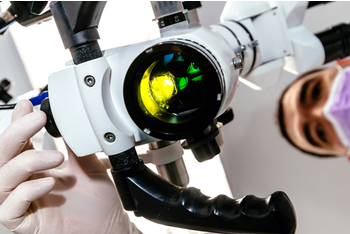
What Is a Medical Laser?
The word laser is an acronym that stands for Light Amplification by Stimulated Emission of Radiation. A laser is a beam of light so concentrated and focused that it can cut through metal and glass.
Developed in 1960, medical lasers have applications in a wide variety of disciplines, including communications, military, entertainment, and medicine. In medicine and dentistry, laser technology is used surgically to both stimulate cell proliferation and vaporize cells, as well as many other things between those two extremes. The applications of lasers are virtually endless in modern dental technology.
In dentistry, soft tissue lasers perform various surgical methods by cutting tissues, including gums (soft tissues) and hard tooth surface structure and bone (hard tissues). Different types of lasers emit this concentrated light beam at different wavelengths. The various tissues in the body absorb different wavelengths, giving certain lasers effectiveness in specific types of tissue.
Specific lasers are used for particular dental procedures. When the body’s tissue absorbs laser energy, the temperature it reaches determines what happens to the surrounding tissue. The laser can stimulate cell proliferation, cause proteins to denature, vaporize the tissue, or completely dehydrate and then burn the tissue. For this reason, only practitioners with advanced training in laser dental surgery provide safe, accurate patient care with a dental laser.
What Dental Procedures Use Soft Tissue Lasers?
Laser technology is used in a wide variety of dental services, including everything from removing tooth decay from teeth to cutting away gum tissue for the removal of diseased areas. In our practice, we use a laser geared toward the health of the hard and soft tissues around each tooth.
We use lasers to treat and remove excessive or diseased gum tissue. We kill bacteria and infection in deep gum pockets. Lasers can loosen hard tartar buildup, making removal easier from the root of a tooth. We also use lasers to stimulate the regrowth of bone around a tooth that was lost due to gum disease. Lasers can even help us save failing dental implants!
In our practice, we use laser dental surgery for periodontal (gum) surgery, treatment of peri-implantitis, preserving the jawbone in an area to receive a dental implant, and regeneration of bone and gum tissues. We also use lasers to cut away questionable lesions for biopsy and improve the cosmetic appearance of “gummy” smiles with greater accuracy.
How Does Minimally Invasive Laser Technology Compare to Traditional Methods?
Our minimally invasive laser treatments offer significant advantages over traditional methods. Where conventional surgery might damage healthy tissue, laser precision ensures only targeted areas are affected, preserving surrounding tissue integrity. This advancement in dental technology represents a fundamental shift from traditional dentistry practices.
What Are the Benefits of Laser Dental Surgery?
Lasers, like most technological advances in dentistry, provide many benefits to both the dentist and the patient. We choose to provide laser dental surgery because we believe it gives the best possible outcome for our patients through enhanced patient care.
Reduce Bleeding and Minimize Complications
Surgery involves cutting into tissue, which always carries a risk of bleeding. By using laser technology, we reduce the bleeding that occurs. Laser energy promotes hemostasis (the stopping of blood flow). Our lasers do this by producing a coagulating, or clotting, effect. In many cases, our patients do not have any bleeding at all after leaving our office.
No Scalpel – Reducing Dental Anxiety
In laser dental surgery, you do not go “under the knife” because there are no knives, scalpels, or blades used at all. The laser itself, which looks like a small dental handpiece (but without the terrible drilling sound), does the cutting. This fact is very comforting to someone who suffers from dental anxiety and fears the idea of a sharp scalpel cutting the gums. For patients with dental anxiety, this minimally invasive approach provides significant comfort.
No Stitches or Sutures Required
We do not cut open the gums during laser surgical procedures, so there’s no need for sutures to stitch them back together. Stitches can be uncomfortable and irritating to the cheeks, lips, and tongue inside your mouth. They also risk coming untied and needing replacement. Skipping the stitches is a definite benefit of laser dental surgery!
Less Swelling and Inflammation
A smaller, more conservative surgical site leads to less swelling and inflammation. The laser energy itself also reduces the influx of inflammatory cells to the site of injury, minimizing post-operative swelling. Both medical and dental professionals often use lasers at low levels to reduce inflammation and swelling in joints and other areas of the body.
Less Post-Operative Pain
Less inflammation leads to less post-operative pain following a laser surgical procedure. Managing pain after surgery is what caused our nation’s current opioid crisis. By using lasers for surgery, we make the post-operative healing period far less painful, often requiring less anesthetic during the procedure. Patients can easily manage post-operative discomfort from laser treatments with over-the-counter pain relievers like Tylenol or Advil, avoiding stronger medications.
Faster Recovery Time
Every one of those benefits leads to this one. Smaller surgical sites with no scalpel cutting, no irritating stitches, and reduced postoperative inflammation allow the human body to experience faster recovery from laser dental surgery. A laser creates less damage to the tissues, so there’s less to heal. Laser energy also stimulates cell reproduction, which promotes quicker healing and faster recovery for patients.
Treating Oral Lesions, Cold Sores, and Canker Sores
Our advanced laser technology effectively treats various oral lesions beyond traditional gum disease. We can treat cold sores quickly and effectively, often providing immediate relief. Cold sores respond exceptionally well to laser treatment, reducing healing time significantly.
Similarly, canker sores can be treated with precise laser application, providing pain relief and promoting healing. For patients suffering from recurring canker sores or cold sores, laser treatment offers a breakthrough solution. These lesions heal faster with laser treatment compared to traditional methods, and many patients report immediate pain relief after treatment.
Frequently Asked Questions About Laser Surgery in New City
What is LANAP?
LANAP stands for Laser-Assisted New Attachment Procedure. It is an FDA-cleared laser treatment for periodontal disease that uses a specific wavelength of light to target and eliminate the bacteria and diseased tissue inside infected gum pockets without cutting the gums with a scalpel. The laser selectively destroys diseased tissue while leaving healthy tissue untouched, then stimulates the regeneration of bone and connective tissue that periodontal disease has destroyed. LANAP is performed using the PerioLase MVP-7, the only dental laser specifically cleared by the FDA for the LANAP protocol. At Rockland Dental Specialists, board-certified periodontist Dr. Shalom Mintz is an instructor for the Institute for Advanced Laser Dentistry, teaching other dentists the use of this technology.
How is LANAP different from traditional gum surgery?
Traditional gum surgery, also called osseous surgery, involves cutting the gum tissue with a scalpel to fold it back, manually removing diseased tissue and reshaping the bone, and then suturing the tissue closed. While effective, this approach causes significant trauma to the surrounding tissue, results in gum recession, requires stitches, and involves a more painful and lengthy recovery. LANAP achieves the same clinical goal of eliminating infection and stimulating tissue regeneration without any cutting or suturing. The laser targets only diseased tissue, leaving healthy gum intact, which means less recession, less post-operative pain, and a dramatically faster recovery.
Can LANAP treat advanced periodontal disease?
Yes. LANAP was specifically designed for the treatment of moderate to severe periodontitis, the stages of gum disease that involve significant bone loss and deep infected pockets. The procedure targets infected pockets throughout the mouth, eliminating the bacteria and diseased tissue driving the destruction, and stimulates the body’s own regenerative response to rebuild lost bone and connective tissue attachment. For patients who have been told they need traditional gum surgery or who have been avoiding treatment due to fear of the procedure, LANAP offers a clinically proven alternative. Your periodontist will evaluate the stage of your periodontal disease to confirm whether LANAP is appropriate for your case.
Who is a good candidate for LANAP?
Most patients diagnosed with periodontal disease who have pockets that do not resolve with scaling and root planing alone are potential candidates for LANAP. It is particularly well-suited for patients who are medically compromised, take blood thinners, or have conditions that make traditional surgery higher risk, since the laser’s hemostatic effect controls bleeding precisely and the lack of incisions reduces surgical trauma. Patients who have previously avoided gum surgery due to anxiety are also strong candidates because the procedure requires no scalpel, no stitches, and involves far less discomfort. A comprehensive periodontal evaluation is needed to confirm candidacy.
What should I expect during a LANAP procedure?
The procedure is performed under local anesthesia. Your periodontist inserts a thin laser fiber, roughly the width of three human hairs, into each gum pocket and guides it along the root surface. The laser first passes through to eliminate bacteria and diseased tissue, then your periodontist removes calcified deposits from the root surface, and the laser makes a second pass to seal the pocket and stimulate a clot that will support tissue reattachment and bone regeneration. There are no incisions and no sutures. Patients typically notice only mild sensitivity and minimal bleeding during the procedure, and most are comfortable throughout.
Can LANAP regenerate lost bone?
One of LANAP’s most significant advantages over traditional gum surgery is its potential to stimulate true bone regeneration. The laser creates a stable fibrin clot in the treated pocket that protects the area and sets the stage for new connective tissue attachment and bone growth. Clinical studies and the procedure’s FDA clearance are based in part on evidence demonstrating new cementum, new periodontal ligament, and new alveolar bone formation following LANAP treatment — outcomes that are not typically achieved with traditional osseous surgery, which reshapes and removes bone rather than regenerating it.
How does LANAP compare to osseous surgery for treating gum disease?
Both LANAP and osseous surgery aim to eliminate infection and arrest the progression of periodontal disease, but they approach the goal differently. Osseous surgery removes and reshapes diseased bone and tissue through cutting and often results in permanent gum recession and sensitivity. LANAP uses laser energy to selectively remove only diseased tissue while stimulating regeneration of the structures that have been lost. Studies comparing the two approaches show LANAP to be equally effective at eliminating infection while producing less recession, less post-operative pain, faster recovery, and the added benefit of regenerative potential. For patients who are candidates for either approach, LANAP is typically the preferred option at Rockland Dental Specialists.
How do I know if I need LANAP or scaling and root planing?
Scaling and root planing is a non-surgical deep cleaning procedure that is the first line of treatment for periodontal disease and is appropriate for earlier-stage disease where the pockets can be effectively cleaned without surgery. When pockets remain deep after scaling and root planing, infection persists, or bone loss is significant, a surgical intervention is needed. LANAP is the surgical option we most commonly recommend for patients who require that next level of care because it delivers superior results with far less trauma than traditional surgery. The decision is based on the severity of your disease, pocket depth measurements, bone levels visible on imaging, and your overall health. To find out which treatment is right for you, contact Rockland Dental Specialists and schedule a periodontal evaluation.
Schedule Your Laser Surgery Consultation at Rockland Dental Specialists
It’s vital to get treatment right away if you’re dealing with dental issues that require laser dental surgery. Untreated infection risks bone and tooth loss, severe gum recession, and more significant health complications. Best of all, there is minimal LANAP recovery time thanks to our minimally invasive approach.
Rockland Dental Specialists offers LANAP laser dental surgery alongside state-of-the-art dental technology and comprehensive patient care in the New City, NY area. Board-certified periodontist and implantologist Dr. Shalom Mintz, along with Dr. David Peto and our team of periodontists and implant specialists, bring you the best laser gum surgery experience possible with more than 24 years of combined experience. He is passionate about helping patients resolve their gum disease, treat various oral conditions, and maintain their overall oral health. In addition, he is an instructor for the Institute for Advanced Laser Dentistry, teaching dentists in the use of the PerioLase MVP-7.
Schedule a consultation today and discover how our advanced laser technology can transform your dental experience. Contact us today at (845) 259-2500 to speak with one of our team members about the dental services we perform using state-of-the-art procedures, or book an appointment online here.
CONTACT
If you have any questions or comments please complete the form below. Thank you and we look forward to hearing from you.
VISIT
873 ROUTE 45 SUITE 201 NEW CITY, NY 10956
CORNER ROUTE 45 & NEW HEMPSTEAD ROAD