Missing teeth create challenges that extend far beyond appearance, affecting your ability to eat comfortably, speak clearly, and maintain confidence in social situations. Dental implants offer a permanent solution that addresses these concerns while providing benefits that traditional tooth replacement options cannot match. Understanding the long-term advantages of implants helps you make an informed decision about investing in this advanced restorative treatment.
At Rockland Dental Specialists, Dr. Shalom Mintz and our periodontists and implant specialists help patients restore complete, functional smiles through state-of-the-art implant procedures. We explain how implants work differently than bridges or dentures, providing stability that preserves your oral health for decades. Our team’s experience ensures you receive treatment that delivers lasting value and improved quality of life.
Preserving Your Jawbone Structure
One of the most significant long-term benefits of dental implants involves preventing jawbone deterioration. When you lose a tooth, the bone that previously supported that tooth no longer receives stimulation from chewing forces. Without this stimulation, your body resorbs the bone tissue, leading to gradual bone loss. Within the first three months of tooth loss, you can lose up to 25% of the bone in that area.
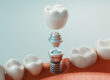
Dental implants function like natural tooth roots, transmitting chewing forces directly into your jawbone. This stimulation signals your body to maintain bone density in the area, preventing the deterioration that occurs with missing teeth. The titanium implant post integrates with your jawbone through osseointegration, creating a stable foundation that actually preserves bone volume over time.
Traditional bridges and dentures do not provide this bone-preserving benefit. Bridges rely on adjacent teeth for support without addressing the underlying bone loss. Dentures rest on top of your gums, applying pressure to the bone surface but failing to stimulate the deeper bone tissue. Over the years of wear, denture patients often experience significant facial changes as their jawbone shrinks.
Maintaining Adjacent Teeth Health
Dental bridges require reshaping healthy teeth adjacent to the gap, permanently altering their structure to accommodate the restoration. Your dentist removes significant enamel from these support teeth, making them dependent on the bridge for protection. If the bridge fails or develops problems, the supporting teeth may require additional treatment or extraction.
Implants stand independently without affecting neighboring teeth. Your periodontist places the implant directly into the jawbone at the missing tooth location, leaving surrounding teeth completely intact. This preservation of natural tooth structure maintains your overall oral health and prevents the domino effect of problems that can occur when healthy teeth are compromised for restorative purposes.
Enjoying Superior Functionality and Stability
Implant-supported restorations provide chewing efficiency comparable to natural teeth. The secure anchorage in your jawbone means you can bite into apples, eat corn on the cob, and enjoy chewy or crunchy foods without worry. Removable dentures offer only a fraction of natural chewing power, and many denture wearers avoid certain foods because they cannot bite or chew them effectively.
Missing teeth or ill-fitting dentures affect speech patterns, causing whistling sounds or slurred words. Implant restorations stay firmly in place, allowing clear, confident speech without adjustments or concerns about movement. Once osseointegration completes and your restoration is attached, the implant functions as part of your body. Proper care and maintenance can keep implants functioning for decades, with many patients enjoying their implants for life.
Cost-Effectiveness Over Time
While dental implants require a larger initial investment than bridges or dentures, they prove more economical over your lifetime. Bridges typically last 10 to 15 years before requiring replacement. Dentures need relining or replacement every five to seven years as your bone structure changes, and these adjustments add up over decades of wear.
Implants require minimal ongoing costs beyond routine dental check-ups and good home care. The crown attached to your implant may eventually need replacement due to normal wear, but the implant post itself remains stable indefinitely. We offer complimentary insurance verifications and create custom payment plans that cater to each patient’s individual needs, making implant treatment accessible.
Protecting Your Remaining Natural Teeth
Missing teeth create gaps that allow adjacent teeth to shift position over time. This movement causes bite problems, increases wear on remaining teeth, and creates new spaces where food traps and bacteria accumulate. Dental implants fill gaps immediately, preventing the chain reaction of problems that follows tooth loss. Bone grafting procedures can help prepare sites for implant placement when bone loss has already occurred, allowing restoration of balanced function.
Invest in Your Smile with Rockland Dental Specialists
Dental implants provide unmatched long-term benefits compared to traditional tooth replacement options, including bone preservation, protection of adjacent teeth, superior functionality, and lasting stability. While the initial investment may seem substantial, the decades of reliable service and improved quality of life make implants the most cost-effective and health-promoting choice for replacing missing teeth.
Dr. Shalom Mintz and our experienced team at Rockland Dental Specialists use advanced technology to provide optimal implant results with minimal discomfort. Our board-certified periodontist and implant specialists bring over 24 years of combined experience in periodontics, implants, and endodontics to every patient’s care. We evaluate your specific needs and create personalized treatment plans that deliver lasting success. Contact us today to schedule your implant consultation and discover how this investment can transform your oral health and overall well-being for years to come.