Your periodontist may recommend a gingivectomy before you have had much time to look into what the procedure involves. Knowing what leads up to it, what happens during the appointment, and how recovery unfolds day by day can make the process far less daunting.
At Rockland Dental Specialists, Dr. Shalom Mintz, board-certified in periodontics and implantology, leads our periodontics team with over 24 years of combined experience treating complex gum conditions across Rockland County. We walk every patient through their treatment plan in detail before any procedure begins, and we offer complimentary insurance verifications along with custom payment plans to keep care accessible.
Who Needs a Gingivectomy?
Gum surgery is not the starting point for periodontal treatment. When scaling and root planing fail to reduce pocket depths to a manageable range, or when gum tissue has thickened or become uneven due to medication side effects or long-standing inflammation, a gingivectomy may be necessary. In those situations, the tissue itself must be removed directly for healing to proceed.
The National Institute of Dental and Craniofacial Research tracks periodontal disease rates by age group and confirms that severity increases significantly among older American adults. Pockets deeper than four to five millimeters cannot be adequately cleaned through brushing and flossing alone, which is why surgical removal of the diseased or overgrown tissue is often required at that stage.
What Happens Before the Procedure
At your pre-treatment appointment, our periodontists and implant specialists review your periodontal charting, recent X-rays, and a complete medical and medication history. Drug-induced gingival overgrowth is a documented side effect of certain antihypertensives and immunosuppressants, and our team accounts for those factors when building your treatment plan. You may be asked to temporarily pause specific medications or use a pre-procedural rinse.
Dr. Mintz will explain the scope of the procedure, the anesthesia plan, and how long your appointment is expected to take. Local anesthesia is administered directly at the treatment site, so you will not feel the procedure as it is happening.
 The Procedure Itself
 The Procedure Itself
Once the area is numb, our periodontist removes diseased or overgrown gum tissue with a surgical scalpel, trimming excess to reestablish a healthy contour around each affected tooth. This exposes the full root surface and eliminates the pocket where bacteria had been accumulating. After the tissue is removed, the site is irrigated, and a soft periodontal dressing is placed to protect the area.
That dressing stays in place for approximately one week. It shields the treated tissue during the initial phase of healing and limits contact between the wound and food or saliva. Some patients find it slightly bulky at first, but most discomfort settles within the first day or two.
Recovering From a Gingivectomy
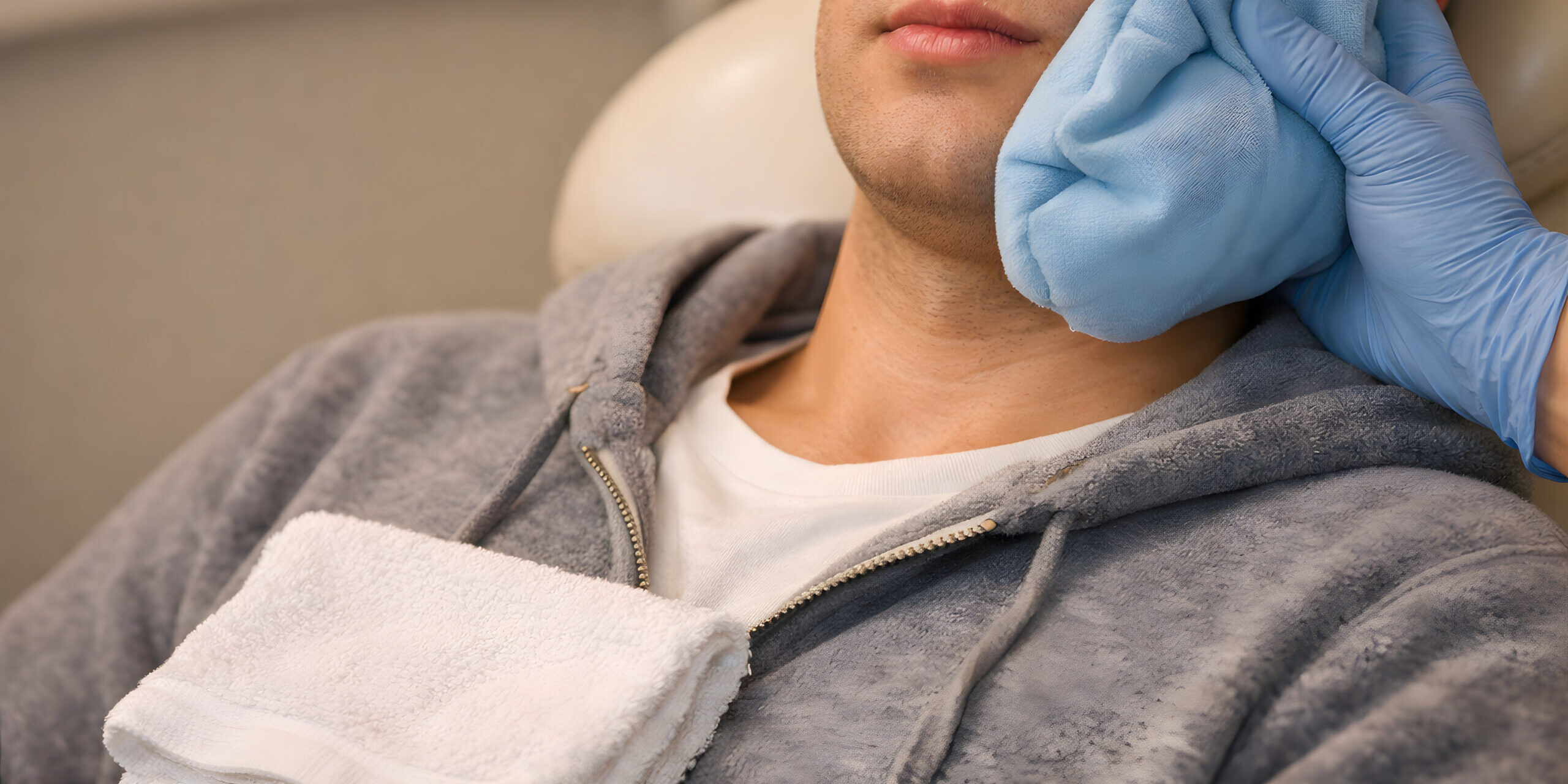
The first two to three days after surgery tend to bring some swelling and aching around the treatment site. Soft, cool foods are easiest to manage during this window, and warm saltwater rinses help keep the area clean without aggravating the tissue. Most patients find that ibuprofen or acetaminophen manages discomfort well, though our team provides prescription medication when the need for treatment warrants it.
Your first follow-up with Dr. Mintz is scheduled within two weeks of the procedure. At that visit, the periodontal dressing is removed, and the tissue is evaluated for healing progress. Tenderness generally subsides quickly after the dressing is removed, and most patients return to a normal diet within a few days of that appointment.
What to Expect at Follow-Up Appointments
After a gingivectomy, we schedule visits every three months during the first year of recovery, consistent with our post-periodontal surgery protocol. At each appointment, our team re-charts pocket depths and checks for any signs of inflammation or infection. Patients with more widespread disease may also benefit from related procedures, such as osseous surgery or pocket reduction surgery, depending on the extent of underlying bone involvement.
After the first year, many patients transition to alternating three-month visits between our office and their general dentist, which maintains periodontal oversight while making routine care more convenient.
Choose Rockland Dental Specialists for Your Periodontal Care
Rockland Dental Specialists brings board-certified periodontal care together with a high-end environment designed to make involved procedures feel manageable. Our office features large dental chairs, complimentary Keurig coffee, and in-room entertainment to help ease appointment-day anxiety. Dr. Mintz is joined by periodontist Dr. David Peto, and our team is available 24/7 to support patients throughout recovery.
If you have been told you may need a gingivectomy or are experiencing symptoms of advanced gum disease, contact our office to schedule a consultation and get a clear picture of your path forward.